
Delve into the intriguing world of Monopoly, a game that has captivated players for generations with its strategic depth and competitive edge.
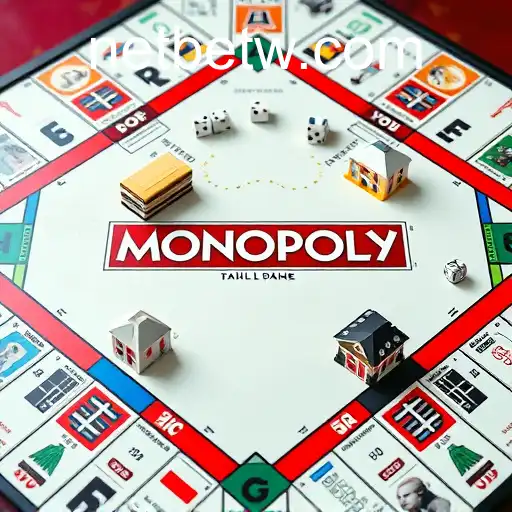
The Immersive World of Monopoly: A Journey Through Gameooo
Monopoly, a game that transcends generations, continues to captivate enthusiasts and casual players alike. Rooted in the notion of wealth accumulation and strategic domination, it not only serves as a highly engaging pastime but also a reflection of socio-economic paradigms through its gameplay. This article delves into the captivating realm of Monopoly, with a special focus on the evolving landscape of the game, dubbed here as "gameooo."
Origins of Monopoly: A Historical Overview
The inception of Monopoly dates back to the early 20th century, originally conceived by Elizabeth Magie as 'The Landlord's Game'. Its purpose was to illustrate the adverse effects of land monopolies and the socio-economic inequality they fostered. Over time, the game evolved into the version introduced by Parker Brothers in 1935, which we recognize today as the classic Monopoly board game.
With its roots in these educational intentions, Monopoly transformed into a cultural phenomenon, offering players the thrill of financial competition. As it entered mainstream entertainment, Monopoly became synonymous with strategic thinking, requiring players to navigate financial challenges and negotiate trades amidst the humorless nature of gameooo's property market.
The Mechanics of Monopoly: A Game of Strategy and Chance
Monopoly is inherently a simple game but remains deeply strategic. Players navigate the board by rolling dice, purchasing properties, and developing them with houses and hotels. The goal is to bankrupt opponents by charging rent, embodying the core of its competitive nature. This dynamic process mirrors real-world financial strategies, where investment, property management, and negotiation play crucial roles.
The element of chance, a key aspect of Monopoly, introduces unpredictability through Chance and Community Chest cards, as well as the roll of the dice. This creates a balance between skillful strategy and luck, enhancing the game's replayability and appeal.
The Cultural Impact of Monopoly
Monopoly's widespread appeal has far-reaching cultural implications. It serves as a social activity that brings people together, whether through family gatherings or competitive tournaments. The game's popularity is further cemented by countless themed editions, catering to diverse interests and fandoms, from iconic films to famous cities.
Beyond entertainment, Monopoly also offers educational value. It fosters financial literacy, teaching players about money management, property investment, and economic principles in an engaging format. This unique combination of fun and learning contributes to the gameooo's enduring significance.
The Evolution of Monopoly in the Digital Age
With advancing technology, Monopoly has seamlessly transitioned into the digital realm. Online editions and mobile apps of the gameooo have introduced new generations to its timeless appeal, attracting tech-savvy players with digital features and connectivity.
The digital format allows for enhanced interaction through virtual boards, 3D-modeled pieces, and online multiplayer modes. This evolution has expanded Monopoly's reach, making it accessible to a global audience, and ensuring its place in modern entertainment.
Monopoly's Role in Fostering Competition and Collaboration
The game of Monopoly, while inherently competitive, also teaches the importance of collaboration and negotiation. Players must coordinate trades, form alliances, and strategize collectively to optimize their position. This dual aspect of competition and collaboration is central to its appeal and educational value.
The dynamics involved in Monopoly simulate real-world economic behaviors and tactics, encouraging players to explore conflict management, cooperation, and the ramifications of decision-making in a controlled environment. This makes Monopoly an excellent tool for learning and growth in a familial and educational setting.
The Future of Monopoly: Keeping the Game Relevant
As Monopoly continues to enchant players worldwide, maintaining its relevance involves embracing innovation and modernization. This could involve incorporating emerging technologies such as augmented reality (AR) for an immersive experience or interactive storytelling elements to enrich gameplay.
Moreover, adapting the gameooo to address contemporary themes, such as environmental sustainability or globalization, could add layers of educational intrigue, aligning with the evolving interests and concerns of modern society.
Conclusion
Monopoly, particularly through its "gameooo" variants, remains a beloved staple of gaming culture. Its ability to educate, entertain, and bring people together across different age groups is a testament to its enduring legacy. As we continue to evolve technologically and socially, Monopoly stands as a relevant and adaptable form of entertainment, ready to engage future generations.